
Irregular Periods and Infertility: What Could Be the Connection?
Informative articles, videos and health news that may be useful for you.
Irregular Periods and Infertility: What Could Be the Connection?
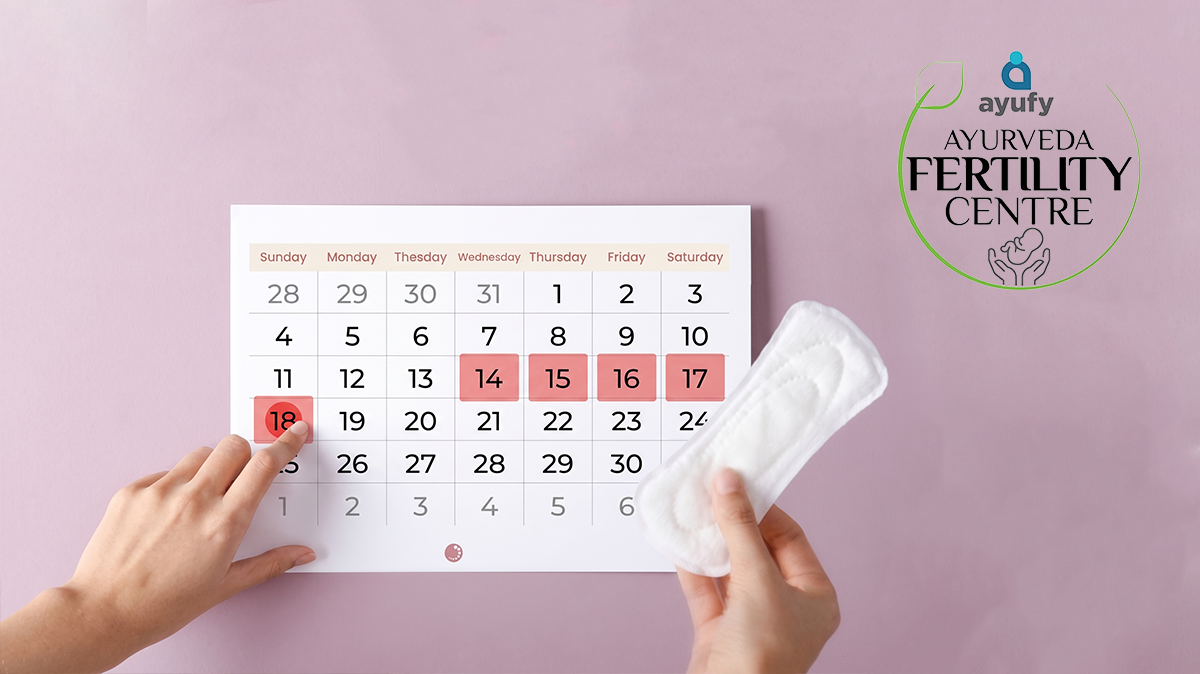
A menstrual cycle does not have to arrive on the same calendar date every month to be healthy.
That distinction matters.
A cycle that moves from 28 days to 30, then 27, then 31 is quite different from a cycle that appears after 35 days, disappears for two months, returns after 45 days and then becomes unpredictable again. Some variation is physiological. Persistent unpredictability deserves a closer look, particularly when pregnancy is being planned.
The conversation around irregular periods and infertility often becomes unnecessarily frightening. An irregular cycle is not a declaration of infertility. It is better viewed as information. In some women, it suggests that ovulation is occurring later than expected. In others, ovulation may not happen during every cycle.
That changes the opportunity for conception.
In a reasonably predictable cycle, a couple can estimate the fertile window with some confidence. When the cycle keeps changing, the date of ovulation can move substantially. A woman who assumes she always ovulates on day 14 may simply be trying at the wrong time.
Day 14 has become far too powerful an idea.
Ovulation usually occurs in relation to the next menstrual period rather than on a universal fixed day. Fertility specialists recognise that menstrual history itself can provide useful information about whether ovulation is likely to be regular. ASRM describes predictable cycles of roughly 21–35 days as commonly associated with regular ovulation, while clearly irregular or absent periods warrant investigation for an underlying cause.
Pregnancy can certainly occur with irregular cycles.
The first job is understanding what those cycles are actually doing.
What the Cycle Can Reveal Before a Fertility Test Does
Patients frequently arrive with laboratory reports before anyone has looked carefully at six months of menstrual dates.
I would reverse that order.
Write the dates down.
Not merely the date of the latest period. Look at the interval between periods over several months, whether bleeding has become lighter or heavier, whether a cycle occasionally disappears, whether acne or increased facial hair has appeared, whether weight has changed, whether sleep has deteriorated, whether there has been a period of unusually intense exercise or emotional strain.
Small details often connect.
Consider a woman whose periods previously arrived every 30 days. Over the last eight months they have stretched to 38–45 days. She is still menstruating, so she assumes everything is functioning normally. Yet she may be ovulating considerably later than before, or not ovulating during some cycles.
Now consider another woman whose cycles move between 27 and 32 days.
Those two situations should not be placed in the same category simply because neither woman menstruates on an identical date each month.
This is where irregular periods and infertility need to be discussed with some precision rather than treated as a single diagnosis.
Ovulatory problems are a recognised contributor to female infertility, and menstrual disturbance is often the first visible clue.
There is also a practical mistake worth mentioning. Fertility applications are useful diaries, but they are not ovaries. An app can estimate ovulation from previous cycle lengths; it cannot guarantee what the ovary will do this month. ASRM specifically notes limitations in relying on fertility-tracking applications to predict the fertile window.
Use the data.
Do not become governed by it.
The Common Patterns Behind Irregular Cycles
PCOS is frequently discussed, and rightly so, but not every irregular cycle is PCOS.
Thyroid dysfunction can alter menstrual rhythm. Significant weight gain or weight loss can do the same. Excessive physical training, major changes in eating patterns, elevated prolactin in selected cases, perimenopausal hormonal changes and disturbances in the signals between the brain and ovaries can all affect ovulation. Pregnancy itself must obviously be excluded when a period is unexpectedly late.
In Kerala, lifestyle history deserves more attention than it sometimes receives.
A woman may be eating perfectly respectable food yet eating it at completely irregular times. She may work hospital night shifts. Someone working in technology may sleep after midnight for years. Long commuting hours can reduce exercise without the person noticing the change. Another woman may become extremely restrictive with food while trying to lose weight before conception.
None of these automatically causes infertility.
They do, however, belong in the discussion.
Hormonal systems respond to the wider metabolic environment. That is why simply giving something to produce a monthly bleed does not always answer the fertility question. A bleed and an ovulation are not interchangeable events.
The underlying pattern needs to be understood.
This is also where indiscriminate testing becomes unhelpful. A fertility evaluation should be directed by age, menstrual history, symptoms, reproductive history and the couple's circumstances rather than by ordering every available hormone test.
And it should remain a couple's evaluation.
A surprisingly persistent mistake is spending months correcting a woman's cycle without checking semen parameters when conception is the actual objective.
Cycle regularity is only one part of fertility.
Why Timing Becomes More Difficult When Ovulation Moves
The relationship between irregular periods and infertility is often less dramatic than patients imagine.
Sometimes it is simply mathematical.
If ovulation occurs regularly, there are predictable opportunities for conception throughout the year. If ovulation occurs less frequently, there may be fewer opportunities. When nobody knows when ovulation is happening, intercourse may repeatedly miss the fertile window.
The NHS similarly notes that pregnancy can become more difficult with irregular periods because ovulation may not occur regularly.
The answer is not to chase a perfect 28-day cycle.
That is another common mistake.
The useful target is healthy reproductive function. In some women, a 32-day cycle is entirely satisfactory. A woman with naturally consistent 33-day cycles should not be treated merely to produce a textbook number.
When more clarity is needed, clinicians may use menstrual history, appropriately timed progesterone testing, ultrasound follicular assessment or selected ovulation-prediction methods. Each has limitations. Urinary LH kits, for example, may occasionally be confusing in women with PCOS because baseline LH levels can be higher.
There is no prize for doing the maximum number of tests.
Good fertility work is selective.
Treatment also needs to recognise when cycle regulation alone will not solve the problem. A couple may have perfectly improved menstrual timing while a tubal factor, significant endometriosis, reduced ovarian reserve with advancing age or a male fertility issue remains relevant.
That is why genuine ovulation support belongs inside a broader fertility assessment rather than being treated as the entire fertility plan.
Where Ayurveda May Fit in a Fertility Plan
The useful discussion around Ayurveda for irregular periods is not whether Ayurveda can force every woman into the same menstrual pattern.
That would be a poor objective.
Ayurvedic fertility care is usually most sensible when it is individualised around menstrual history, digestion, sleep, metabolic health, stress, body composition, food patterns and the broader reproductive picture. At Ayufy, menstrual cycle and ovulation care is presented as part of a wider fertility programme that includes personalised Ayurvedic therapies, lifestyle measures and reproductive-health support.
That broader approach is useful because fertility rarely exists in isolation from the rest of a woman's physiology.
There is also value in avoiding the supplement-shopping mentality.
A cabinet containing seven herbal products is not automatically a fertility programme. Treatment should be selected after assessment, particularly when a woman is already taking thyroid medication, metabolic medicines, fertility drugs or other prescriptions.
Dietary correction may be surprisingly practical. Regular meals. Adequate protein. Less dependence on heavily processed convenience foods. Sensible movement. Better sleep timing. Weight management when clinically appropriate. These changes are not glamorous, but they create a more coherent foundation for reproductive care.
Ayurveda may also be used alongside conventional fertility management rather than positioned as an opponent to it. Ayufy's own patient information describes Ayurvedic care as complementary in situations where assisted fertility treatment is being used.
That collaborative approach is preferable.
For couples considering fertility treatment in Kerala, irregular menstruation should prompt a proper assessment rather than months of guessing. ASRM advises that infertility evaluation need not wait for the conventional 12-month period when a woman already has irregular menstrual cycles or another condition associated with impaired fertility.
There is often plenty that can be worked with once the pattern is identified.
FAQ Section
Can irregular periods make it difficult to get pregnant?
They can make conception less predictable, particularly when irregular periods reflect delayed or inconsistent ovulation. They do not automatically prevent pregnancy. Once ovulation patterns and other fertility factors are understood, treatment can be planned much more precisely.
What causes irregular periods and how can they affect ovulation?
Possible causes include PCOS, thyroid disorders, major weight changes, excessive exercise, stress-related hormonal disruption, perimenopausal changes and some other endocrine conditions. Some of these conditions delay ovulation; others can result in cycles where ovulation does not occur.
Can Ayurveda help regulate irregular menstrual cycles?
Ayurvedic care may be used to support menstrual and reproductive health through individualised dietary, lifestyle and therapeutic approaches. The appropriate programme depends on why the cycle is irregular. Persistent menstrual changes should first be properly assessed rather than treated from symptoms alone.
When should women with irregular periods seek fertility support?
When cycles are repeatedly unpredictable, become markedly longer or shorter than usual, disappear for extended periods, or pregnancy is being planned without success, an earlier fertility assessment can be reasonable. Current fertility guidance recognises irregular menstrual cycles as a reason not to delay evaluation unnecessarily.
What is the connection between irregular periods, ovulation and infertility?
The central connection is ovulation. Irregular cycles may indicate that an egg is being released later than expected or that ovulation is absent in some cycles. Fewer or unpredictable ovulations can reduce opportunities for conception.
Can irregular periods affect fertility? What are the common causes of irregular periods?
Yes, particularly when irregularity reflects an ovulation disorder. PCOS, thyroid problems, substantial changes in body weight, intensive exercise, hormonal changes around menopause and certain endocrine disturbances are recognised causes.
Can irregular periods be treated with Ayurveda?
Ayurvedic management can form part of personalised care for women with menstrual irregularity, especially where lifestyle, sleep, stress, digestion and metabolic factors need attention. Treatment should be selected according to the woman's underlying pattern rather than using the same remedy for every irregular cycle.
Can I get pregnant with irregular periods?
Yes. Women with irregular cycles do conceive naturally. The practical challenge is identifying whether ovulation is occurring and when the fertile window falls. Correcting an identifiable underlying problem can often make the conception plan considerably clearer.
When should I consult a fertility specialist for irregular periods?
Consultation is reasonable when irregular cycles persist, when periods frequently disappear, when there are associated hormonal symptoms, or when pregnancy is being planned and the fertile window remains difficult to identify. Earlier assessment is particularly useful when age or another known fertility factor makes time relevant.
With irregular periods and infertility, the menstrual calendar is rarely the whole diagnosis. It is the starting clue. Once the reason behind the irregularity is understood, the conversation becomes far more constructive: Is ovulation occurring? Is it simply delayed? Is a metabolic or hormonal factor influencing the cycle? Are both partners being assessed?
Share Post





Our Team
VIEW ALL
Dr. Satheesh Kumar
Senior Fertility Specialist
BAMS
Dr. Jobby George
Consultant
BAMS, CCAG (Course in Ayurveda)
Dr. Liya C K
Fertility Specialist
BAMS
Dr. Arbaz Mudnal
Consultant Ayurveda
BAMS, MD
CONTACT US
Ayufy Fertility Centre
Kundara Rd, Nallila, Kollam,
Kerala 691515
097454 84477


SERVICES
Herbal Medicines
Preconception Therapies
Lifestyle Therapies
Infertility Counselling